About Us
About US
About The Church Of India
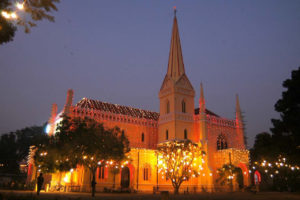
THE CHURCH OF INDIA, PAKISTAN, BURMA AND CEYLON (ANGLICAN) – CIPBC
The Original Anglican Church in India
Greetings in the Name of our Lord to the official website of The Church of India (Anglican) – CIPBC.
WHO WE ARE
We are the historic, original and lawful continuation of the Anglican Church in India, with an unbroken heritage of 400 years from the year 1600, when Her Majesty Queen Elizabeth I was still on the throne of England. We are the Church established and protected by law under The Indian Church Act, 1927 (17 & 18 Geo. 5, Ch. 40).
As declared in Declaration No.1 of our Constitution, Canons and Rules, we are an integral part of the One Holy, Catholic and Apostolic Church. Today, the Church of India CIPBC is an autonomous body, completely independent and self-governing under its own Constitution, Canons and Rules. The Church of India upholds the true Anglican Way – Catholic Faith and Orthodox Order.
HISTORY OF THE CHURCH OF INDIA AND INDIAN CHURCH TRUSTEES
The Anglican presence in India dates back four hundred years to 1600. From that time until within living memory, British chaplains and missionaries arrived in ever-increasing numbers, and were the first to minister to the expatriate British community, and later to bring the Gospel of Jesus Christ to the Indian people themselves.
The Church of India was part of the Church of England and was known as the Church of England in India, as a separate Province of the Church of England until 1927.
By Royal Letters Patent, the Diocese of Calcutta was erected in 1814. Its jurisdiction extended over the whole of India, Pakistan, Bangladesh, Burma (Myanmar), Ceylon (Sri Lanka) and from 1824 to 1836, the continent of Australia. Upon the formation of the Dioceses of Madras in 1835 and Bombay in 1837, the Church in India was formed into a Province, with the Bishop of Calcutta as Metropolitan ex officio.
Though styled the Third Province of the Church of England, the Church of India was always an independent and self-governing Province. The Church of England had no jurisdiction over its internal governance, doctrine, discipline or worship. It was governed solely by its own General Council, Episcopal Synod and Metropolitan.
The Indian Church Measure was passed on 23rd November 1927 by the National Assembly of the Church of England to provide for the dissolution of the legal union between the Church of England and The Church of England in India.
On the 22nd of December 1927, the Parliament of England passed an enactment known as the Indian Church Act of 1927. The Indian Church Act, 1927 (17 & 18 Geo. 5, Ch. 40) makes provision incidental to and consequential on the dissolution of the legal union.
The date of dissolution was fixed through Notification dated 15th February 1930 and the date of severance was notified as 1st March 1930. Hence in 1930 a new, independent Church was formed – the Church of India, Burma and Ceylon. After the Independence of India and creation of Pakistan in 1947, it became the Church of India, Pakistan, Burma and Ceylon (CIPBC).
With the enactment of the Indian Church Measure and the Indian Church Act 1927, the Church adopted its Constitution, Canons and Rules on the 31st day of January 1930 in the General Council assembled in Calcutta, which came into force on 30th March 1930. The Church of India, Pakistan, Burma and Ceylon is being administered by the Constitution, Canons and Rules.
THE INDIAN CHURCH TRUSTEES – THE LAWFUL OWNERS
The Church of India (CIPBC) continues to receive a measure of legal protection under the terms of the Indian Church Measures of 1927 and the Indian Church Act of 1927. After the Indian Church Act 1927 it was enacted that upon the date of severance and subject to certain exceptions therein set forth, all property being held on behalf of or for the benefit of the Indian Church should vest in the Indian Church Trustees.
“And whereas by sub-section 1 of Section 6 of the said Act it was enacted that at any time after the commencement of the Act the General Council of the Indian Church might by resolution appoint such number of persons as they should see fit (not being less than three) to represent the Indian Church and to hold property for any uses or purposes thereof, and that when it should be shown to our satisfaction that the said Council had appointed such persons it should be lawful for Us by Charter to incorporate them and their successors with power to hold land without license in mortmain under the name of the Indian Church Trustees:”
And whereas the General Council of the Indian Church at a meeting held at Calcutta on the 2nd day of February appointed the members of the Indian Church Trustees and it was incorporated by the Royal Charter on the 11th of June 1929 and promulgated in India on 20th July, 1929 and their qualifications and actions were to be regulated by the schedule of rules attached to the Charter, which states that the Indian Church Trustees will be elected, supervised and controlled by the General Council of the Church of India only.
On the basis of the proclamation made by the Privy Council on India, the Church Act 1927 and Independence Act 1947, the ownership of the Indian Church properties was examined and the Government of India, Ministry of Defence through its letter No. Eccl. 472/D-2(b), dated 23rd March 1948, New Delhi declared that the properties of the Church of India are vested in the Indian Church Trustees and that the Church of India is in effective control and administration over the Church properties and the General Council is regularly holding its meetings according to the Constitution, Canons, and Rules.
The Indian Church Act, 1927 is an Indian Act. It is an existing law saved under Article 372 of the Constitution of India and continues in full force and effect. The said Act has never been amended in the Parliament of India.
WHY WE ARE NOT WITH THE ANGLICAN COMMUNION / CHURCH OF ENGLAND – _CAUSA SEPARATIONIS_
We solemnly declare that the Church of India CIPBC is no longer in communion with the Church of England and the so-called Anglican Communion of Canterbury, and this for reasons of Faith and Conscience.
For the Church of England and the Anglican Communion under Canterbury have fallen into manifest heresy and grievous apostasy, by departing from the Apostolic Faith once delivered to the Saints and held by the Early Church Fathers.
They have erred by:
- The Purported Ordination of Women to the Sacred Priesthood and Episcopate – an innovation never known to the One, Holy, Catholic and Apostolic Church, contrary to Holy Scripture and Sacred Tradition.
- The Blessing, Solemnization and Acceptance of Same-Sex Unions and Same-Sex Marriage – which is contrary to the plain teaching of Holy Scripture, the unanimous witness of the Fathers, and the Universal Moral Law of the Church.
By these acts of heresy, they have lost the Apostolic Faith and have drifted away from true Orthodoxy and Catholicity.
And by departing from the Apostolic Faith, Order and Discipline, and by attempting to confer Holy Orders upon those whom the Universal Church has never ordained, they have rendered their own orders doubtful and have broken the chain of Apostolic Succession. They have therefore lost their valid Apostolic Succession.
Therefore, Quare Separavimus – we have separated not from the Church, but from heresy. We remain what the Church of England has ceased to be: a true Anglican body upholding the Catholic Faith and Orthodox Order, faithful to Holy Scripture, the Book of Common Prayer, and the Thirty-Nine Articles of Religion as understood by the Fathers and Councils of the Undivided Church. We alone preserve the valid and historic Apostolic Succession in the Anglican lineage in India.
CONCERNING CSI AND CNI
We do not recognise the bodies known as the Church of South India, formed on 28th September 1947, and the Church of North India, formed on 29th November 1970. These were pan-Protestant unions engineered by the Lambeth Conference and the Archbishop of Canterbury, who has had no jurisdiction whatsoever over the Church of India since 1927.
No lawful resolution was ever passed by the General Council of the CIPBC to dissolve or merge itself. The Indian Church Act, 1927 was never amended to permit such mergers. Therefore, both unions are canonically and legally null and void ab initio.
After these unlawful pan-Protestant unions of CSI and CNI, a large number of faithful Bishops, Priests, Deacons and Laity remained true to the Church of India CIPBC, upholding the true Anglicanism, the Catholic Faith and Orthodox Order. They refused to join the schism and continued steadfast in the historic Church protected by the Indian Church Act, 1927.
When the Apostolic Succession of the Church of India had to be restored after the pan-Protestant unions of CNI and CSI, it was restored by the Anglican Catholic Church. The line continues today in our present Metropolitan. We are their lawful successors.
THE RESTORATION OF OUR PROVINCE
In 1978, following the Affirmation of St. Louis, our Province was restored as the Second Province of the Anglican Catholic Church, Original Province, under The Most Reverend Louis Falk, Archbishop and Primate of the ACC.
– 1983: Bishop John Asha Prakash was consecrated in California.
– 1984: At YMCA, New Delhi, Bishop Samuel Peter Prakash, Bishop Gideon of Calcutta and Bishop Rao of Amritsar were consecrated.
– 1989: The Diocese of Bombay was restored – Bishop Anselm Ranganadhan.
– 1996: The Diocese of Nagpur was restored – Bishop Francis Sylvester.
In 1991, following the unlawful consecration at Deerfield Beach, Louis Falk defected to the American Episcopal Church. With him, John Asha Prakash and his son Samuel P. Prakash also defected and formed a separate sect.
A CLARIFICATION FOR THE FAITHFUL
The body styling itself the “Anglican Church of India” led by Samuel P. Prakash is not the Church of India (Anglican) – CIPBC. It is an unlawful body formed to misguide the faithful.
Samuel P. Prakash is not the Metropolitan of India. He was duly and canonically excommunicated by the Anglican Catholic Church and by the CIPBC by Bishop James Bromley, our then Acting Metropolitan, on 3rd October 1991. The official Instrumentum Excommunicationis remains on record.
The lawful Apostolic Succession continued through Archbishop William Lewis, Acting Metropolitan from 1991 to 1995, Bishop James Bromley, and Bishop Rommie Starks. Bishop Bromley appointed Father John Augustine as Archdeacon and Metropolitan’s Commissary.
In 2003, Father John Augustine was duly elected and consecrated as Bishop of Lucknow.
AMENDMENT OF 2005 – CONCERNING THE SEE OF THE METROPOLITAN
And whereas it had been the ancient custom that the Bishop of Calcutta was ex officio the Metropolitan of India; Now therefore, the Episcopal Synod and the General Council of the Church of India CIPBC, duly assembled in the year of our Lord 2005 at Lucknow, in exercise of its lawful and canonical authority under the Constitution, Canons and Rules, did unanimously enact and promulgate an Amendment.
By this Canonical Amendment of 2005, it is hereby declared, decreed and established for the avoiding of all doubts, that the Sacred See and Office of the Metropolitan and Archbishop of India is not territorially confined to Calcutta alone, but may be held ex officio by any Bishop of any Diocese of the Church of India, Pakistan, Burma and Ceylon (Anglican), whosoever shall be duly and canonically elected by the Episcopal Synod and the Diocesan Council of Calcutta and enthroned according to the ancient rites of this Church.
This amendment was made for the good governance, effective administration and unity of the Church throughout India.
In accordance with this Holy Amendment, The Most Reverend John Augustine, Bishop of Lucknow, was canonically elected Metropolitan and Archbishop of India in 2005.
OUR PRESENT COMMUNION – _COMMUNIO IN SACRIS_
From 1984 to 2018, the Church of India, Pakistan, Burma and Ceylon (Anglican) faithfully served as the Second Province of the Anglican Catholic Church, Original Province.
Today, by the Grace of God, the CIPBC continues as an autonomous and completely independent Province. We are not under any foreign Archbishop. We are self-governing under our own General Council, Episcopal Synod and Constitution.
We are now in Communio in Sacris with the Anglican Catholic Church, Original Province and with other faithful Traditional Anglican jurisdictions worldwide who uphold the Affirmation of St. Louis.
On 24th February 2020, The Most Reverend John Augustine, Metropolitan of India, and The Most Reverend Mark Haverland, Acting Primate and Metropolitan of the Anglican Catholic Church, Original Province, signed the Agreement of Communio in Sacris
This Agreement declares: We are two autonomous Provinces in Communio in Sacris – Una Sancta – One Holy Church, united in one Faith, one Order, one Sacraments, and one Apostolic Succession, while remaining completely independent and self-governing.
OUR PRESENT STATE – 2026
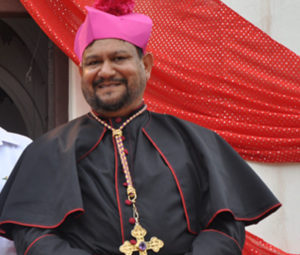
The Church is presently led by The Most Reverend John Augustine, Archbishop and Metropolitan of India, enthroned at Christ Church Pro-Cathedral, Mahatma Gandhi Marg, Lucknow.
The General Council, Episcopal Synod and all Diocesan Councils are active and are regularly convened in accordance with our Constitution, Canons and Rules.
The Church of India CIPBC is presently engaged in legal defence of the Faith and Patrimony before the Honourable High Court against the Church of South India (CSI), Church of North India (CNI), and other unlawful bodies falsely claiming to be the CIPBC and claiming rights over its properties vested in the Indian Church Trustees as absolute owners under the Indian Church Act, 1927.
All historic Anglican Churches, Cathedrals, Chapels, Cemeteries and connected properties are vested in the Indian Church Trustees. The Church, through its lawful General Council and the Indian Church Trustees, is taking all necessary canonical and legal steps to protect its historic Churches from unlawful sale, encroachment, alienation and misuse of its lawful title CIPBC – Pro Fide et Patrimonio.
We seek your prayers and invite you to join us in preserving and upholding the true and historic Anglican Faith in India.
Laus Deo.